
Showing posts with label Sweet syndrome. Show all posts

Sweet syndrome (Diagnosis, Management)


DIAGNOSIS OF SWEET SYNDROME

Diagnosis is based on symptoms and tissue samples (biopsy). A key feature of Sweet Syndrome is that the skin lesions heal without scarring, and there’s no blood vessel inflammation in the tissue samples. This is important because it might indicate other serious illnesses, like cancer, and early diagnosis and treatment are critical.


CLASSIC OR IDIOPATHIC SWEET SYNDROME:

To diagnose this, both "major criteria" and at least two "minor criteria" need to be met.

Major Criteria:

  1. Sudden onset of painful red bumps or lumps, sometimes with blisters or other skin changes.

  2. Biopsy shows white blood cell infiltration without blood vessel inflammation.

  Minor Criteria:

  1. Associated with an underlying condition like an infection, vaccination, inflammatory disease, cancer, or pregnancy.

  2. Fever above 38°C (100.4°F).

  3. Abnormal lab results, such as elevated ESR (inflammation marker), high C-reactive protein, increased white blood cells, or neutrophils.

  4. Excellent response to steroid treatment.


DRUG-INDUCED SWEET SYNDROME:

To diagnose this type, all five of the following criteria must be met:

1. Sudden onset of painful red bumps or lumps.

2. Biopsy showing white blood cells without blood vessel inflammation.

3. Fever above 38°C (100.4°F).

4. Symptoms starting after taking a certain drug, or after a drug challenge.

5. Lesions improve after stopping the drug or with steroid treatment.


DIFFERENTIAL DIAGNOSIS

  • Allergic Contact Dermatitis: Typically shows a delayed hypersensitivity reaction with exposure to allergens.
  • Cellulitis: A bacterial skin infection with redness, swelling, and warmth, often with systemic symptoms.
  • Dermatologic Aspects of Behçet Disease: Features oral and genital ulcers, and skin lesions such as erythema nodosum or pseudofolliculitis.
  • Dermatologic Manifestations of Herpes Simplex: Can present with vesicular lesions, commonly on lips or genitals.
  • Drug Eruptions: Drug-induced skin reactions can vary widely but often include a history of recent medication use.
  • Erythema Multiforme: Characterized by targetoid lesions and can be triggered by infections or medications.
  • Erythema Nodosum: Presents with painful, erythematous nodules typically on the lower legs, often associated with systemic conditions.
  • Pyoderma Gangrenosum: Presents with rapidly enlarging, painful ulcers, often with a neutrophilic infiltrate and can be associated with systemic disease.

These considerations and differential diagnoses are crucial for distinguishing Sweet syndrome from other conditions with similar presentations.

Laboratory Studies

1. Complete Blood Cell (CBC) Count with Differential:

  • Purpose: Detects neutrophilia and screens for hematologic disorders or malignancy.
  • Findings: Neutrophilia is typical; absence of neutrophilia in a neutropenic patient does not rule out Sweet syndrome. Anemia and thrombocytopenia may indicate underlying malignancy.
  • Follow-Up: Abnormalities may warrant a bone marrow biopsy.

2. Erythrocyte Sedimentation Rate (ESR) and C-Reactive Protein (CRP):

  • Purpose: Assess inflammation levels.
  • Findings: Elevated ESR (>90% of cases) and CRP are common but nonspecific.

3. Urinalysis:

  • Purpose: Identify renal involvement.
  • Findings: May show proteinuria and/or hematuria.

4. Liver Functions Test:

  • Purpose: Evaluate liver function.
  • Findings: May show nonspecific elevation of hepatic enzymes.

5. Antineutrophilic Cytoplasmic Antibodies (ANCAs):

  • Purpose: Investigate autoimmune components.
  • Findings: Present in some patients but not consistent.

6. Cultures:

  • Purpose: Rule out infections.
  • Findings: Cultures should be obtained for bacteria, fungi, and mycobacteria.


Imaging Studies

1. Chest Radiograph:

·         Purpose: Evaluate for pulmonary involvement if symptoms are present.

·         Findings: Pulmonary symptoms are responsive to systemic corticosteroids.

2. Systemic Evaluation:

  • Purpose: Investigate for underlying malignancy, especially if ulcerative lesions, oral lesions, or abnormal blood counts are present.
  • Imaging: Use appropriate modalities for early detection and treatment of suspected malignancies.


3. FDG Positron-Emission Tomography (PET):

  • Purpose: Assess myeloproliferative disorders and solid tumors.
  • Findings: Useful for evaluating early malignancies.

Procedures

1. Skin Biopsy:

  • Purpose: Confirm diagnosis.
  • Findings: Dense neutrophilic infiltrate in the reticular dermis; massive papillary dermal edema. True vasculitic changes are absent.

2. Bone Marrow Aspiration:

  • Purpose: Detect myelodysplastic disease.
  • Indications: Abnormal CBC count or atypical bullous/ulcerative Sweet syndrome.

3. Cancer Screening and Evaluation for Inflammatory Bowel Disease:

  • Purpose: Identify underlying causes, particularly in patients with bullous or ulcerative lesions.


Histologic Findings

  • Classic Pattern: Dense neutrophilic infiltrate in the reticular dermis with massive papillary dermal edema. Leukocytoclastic nuclear debris may be present. True vasculitic changes are absent.
  • Epidermis: Usually spared, but spongiosis and subcorneal pustules can be seen.
  • Subcutaneous Involvement: Rare, but if present, shows extensive involvement of the reticular dermis.

Variants

1. Histiocytoid Sweet Syndrome:

·         Features: Includes histiocytoid cells, often mistaken for histiocytes.

·         Differential: Leukemia cutis.

2. Other Variants: Lymphocytic, subcutaneous, and cryptococcoid types.


Treatment & Management of Acute Febrile Neutrophilic Dermatosis (Sweet Syndrome)

Sweet syndrome generally responds well to oral corticosteroids. Without treatment, the condition may persist for weeks to months, often resolving without leaving scars. However, recurrence is common in idiopathic and malignancy-associated forms. In some rare instances, lesions can recur or persist indefinitely. Malignancy-associated cases can also present with more severe, treatment-resistant bullous or ulcerative lesions, mimicking atypical pyoderma gangrenosum.


MEDICAL CARE

1. Corticosteroids:

·         Systemic Corticosteroids: Prednisone is the primary treatment, showing rapid effectiveness. The typical dosage is 0.5-1 mg/kg/day. For severe cases, 2 mg/kg/day divided into two doses may be required. Pulmonary infiltrates often respond promptly. Recurrence is common, and a slow tapering of the steroid is recommended to manage it.

·         Topical Corticosteroids: High-potency options like clobetasol propionate (0.05%) or intralesional glucocorticoids (e.g., triamcinolone acetonide 3-10 mg/mL) can be effective for localized lesions.

2. Steroid-Sparing Agents:

Indomethacin, Colchicine, Potassium Iodide: Useful in small series of patients. Colchicine, in particular, has been reported as effective in a retrospective study as a first-line therapy.

Dapsone, Cyclosporine, Etretinate, Pentoxifylline, Clofazimine: Have been used with anecdotal success.

Other Agents: Doxycycline, metronidazole, isotretinoin, methotrexate, cyclophosphamide, chlorambucil, adalimumab, infliximab, IVIG, pulse doses of methylprednisolone, and interferon-alfa have shown effectiveness in various cases.

3. Thalidomide: Used in recalcitrant cases when other treatments, including corticosteroids, metronidazole, dapsone, and methotrexate, fail.

4. Biologic Agents:

  • Etanercept: Effective in some cases, particularly in rheumatoid arthritis patients. Caution is needed due to potential cancer risk.
  • Anakinra and Rituximab: Reported as effective in refractory cases.
  • Adalimumab: Effective in recalcitrant cases.


Consultations

  • Dermatologist: For diagnosis, evaluation, and management of Sweet syndrome, as well as to identify underlying causes.
  • Internal Medicine Specialist: For evaluation of underlying or triggering conditions.

This comprehensive approach helps in effectively managing Sweet syndrome, particularly by addressing both the disease itself and any underlying conditions or triggers.


Sweet syndrome Part 1/3

Sweet syndrome Part 2/3

Sweet syndrome - Diagnosis, Management (Hinglish)


DIAGNOSIS OF SWEET SYNDROME

Sweet syndrome ka diagnosis symptoms aur tissue samples (biopsy) ke basis par hota hai. Is syndrome ki ek khaas baat yeh hai ki skin ke ghaav bina daag ke theek ho jaate hain, aur tissue samples mein blood vessel inflammation nahi hoti. Yeh isliye important hai kyunki yeh kisi aur serious bimari, jaise cancer, ka indication ho sakta hai, aur jaldi diagnosis aur treatment zaroori hai.


CLASSIC YA IDIOPATHIC SWEET SYNDROME:

Iska diagnosis karne ke liye "major criteria" aur kam se kam do "minor criteria" meet karni hoti hain.

Major Criteria:

  1. Ekdum se dardnaak laal danay ya dher saare chhote bumps, kabhi kabhi blisters ya skin mein doosre badlav ke saath.

  2. Biopsy dikhati hai ki white blood cells skin mein gather ho gaye hain, bina blood vessels mein inflammation ke.

Minor Criteria:

  1. Koi underlying condition jaise infection, vaccination, inflammatory disease, cancer, ya pregnancy se sambandh.

  2. Bukhaar 38°C (100.4°F) se zyada.

  3. Lab results mein abnormalities jaise elevated ESR (inflammation marker), high C-reactive protein, ya increased white blood cells/neutrophils.

  4. Steroid treatment se accha response.


DRUG-INDUCED SWEET SYNDROME:

Is type ko diagnose karne ke liye yeh paanchon criteria meet honi chahiye:

1. Ekdum se dardnaak laal bumps ya ghaav.

2. Biopsy dikhati hai white blood cells without blood vessel inflammation.

3. Bukhaar 38°C (100.4°F) se zyada.

4. Symptoms kisi particular dawa lene ke baad ya drug challenge ke baad shuru hote hain.

5. Symptoms dawa band karne ke baad ya steroid treatment se theek hote hain.


DIFFERENTIAL DIAGNOSIS

  • Allergic Contact Dermatitis: Allergens ke exposure ke baad delayed hypersensitivity reaction hota hai.
  • Cellulitis: Ek bacterial skin infection hoti hai jisme redness, swelling, aur garmi hoti hai, aur systemic symptoms bhi ho sakte hain.
  • Behçet Disease: Oral aur genital ulcers ke saath hoti hai, skin lesions jaise erythema nodosum ya pseudofolliculitis ke saath.
  • Herpes Simplex: Vesicular lesions commonly lips ya genitals par dikhte hain.
  • Drug Eruptions: Drug-induced skin reactions kaafi diverse hoti hain, aur recent medication ka history hota hai.
  • Erythema Multiforme:  Targetoid lesions dikhte hain aur infections ya medications ke kaaran ho sakti hai.
  • Erythema Nodosum: Painful, red nodules lower legs par dikhte hain, jo systemic conditions ke saath associated hoti hain.
  • Pyoderma Gangrenosum: Rapidly badi hone wali, dardnaak ulcers, jisme neutrophilic infiltrate hota hai, aur systemic disease se associated ho sakti hai.


Yeh differential diagnoses Sweet syndrome ko doosri bimariyon se distinguish karne mein madadgar hain.


LABORATORY STUDIES

1. Complete Blood Cell (CBC) Count with Differential:

  • Maqsad: Neutrophilia detect karna aur hematologic disorders ya malignancy ko screen karna.
  • Findings: Neutrophilia typical hota hai; neutropenic patient mein neutrophilia ka absence Sweet syndrome ko rule out nahi karta. Anemia aur thrombocytopenia underlying malignancy ka indication de sakti hai.
  • Follow-up: Agar CBC count mein koi abnormality ho to bone marrow biopsy ka suggestion diya ja sakta hai.

2. Erythrocyte Sedimentation Rate (ESR) aur C-Reactive Protein (CRP):

  • Maqsad: Inflammation levels assess karna.
  • Findings: Elevated ESR aur CRP aksar common hote hain lekin nonspecific hote hain.

3. Urinalysis:

  • Maqsad: Renal involvement ka pata lagana.
  • Findings: Proteinuria ya hematuria ho sakti hai.

4. Liver Functions Test:

  • Maqsad: Liver function evaluate karna.
  • Findings: Nonspecific elevation of hepatic enzymes ho sakti hai.

5. Antineutrophilic Cytoplasmic Antibodies (ANCAs):

  • Maqsad:  Autoimmune components investigate karna.
  • Findings: Kuch patients mein present ho sakti hain, lekin consistently nahi hoti.

6. Cultures:

  • Maqsad: Infections ko rule out karna.
  • Findings: Bacteria, fungi, aur mycobacteria ke liye cultures obtain kiye jaane chahiye.

Imaging Studies:

1. Chest Radiograph:

  • Maqsad: Pulmonary involvement evaluate karna agar symptoms ho.
  • Findings: Pulmonary symptoms systemic corticosteroids se theek ho jaate hain.

2. Systemic Evaluation:

  • Maqsad: Underlying malignancy ka investigation karna, especially agar ulcerative lesions, oral lesions, ya abnormal blood counts ho.

3. FDG Positron-Emission Tomography (PET):

  • Maqsad: Myeloproliferative disorders aur solid tumors ka assessment.
  • Findings: Early malignancies ko evaluate karne ke liye useful hoti hai.

Procedures:

1. Skin Biopsy:

  • Maqsad: Diagnosis confirm karna.
  • Findings: Reticular dermis mein dense neutrophilic infiltrate; massive papillary dermal edema hoti hai. True vasculitic changes absent hoti hain.

2. Bone Marrow Aspiration:

  • Maqsad: Myelodysplastic disease detect karna.
  • Indications: Agar CBC count mein abnormality ho ya atypical bullous/ulcerative Sweet syndrome ho.

3. Cancer Screening aur Inflammatory Bowel Disease ka Evaluation:

·         Maqsad: Underlying causes ko identify karna, khaaskar bullous ya ulcerative lesions wale patients mein.


Histologic Findings:

Classic Pattern: Reticular dermis mein dense neutrophilic infiltrate aur massive papillary dermal edema hota hai. Leukocytoclastic nuclear debris present ho sakti hai. True vasculitic changes absent hoti hain.

Epidermis:Usually spared hoti hai, lekin spongiosis aur subcorneal pustules dekhe ja sakte hain.

Subcutaneous Involvement: Rare hoti hai, lekin agar present ho, to reticular dermis mein extensive involvement hoti hai.


Variants:

1. Histiocytoid Sweet Syndrome:

·         Features: Isme histiocytoid cells hoti hain, jo kabhi kabhi galti se histiocytes samjhe jaate hain.

·         Differential: Leukemia cutis.

2. Doosre Variants: Lymphocytic, subcutaneous, aur cryptococcoid types.


TREATMENT & MANAGEMENT OF ACUTE FEBRILE NEUTROPHILIC DERMATOSIS (SWEET SYNDROME)

Sweet syndrome ko generally oral corticosteroids se treat kiya jata hai, aur iska response kaafi accha hota hai. Agar treatment na mile, to yeh condition kuch hafton se mahino tak chal sakti hai, lekin aksar bina daag ke theek ho jati hai. Idiopathic aur malignancy-associated forms mein recurrence common hota hai. Kuch rare cases mein lesions waapas aa sakte hain ya lambey samay tak bane reh sakte hain. Malignancy-related cases mein zyada severe, treatment-resistant bullous ya ulcerative lesions ho sakte hain, jo kabhi kabhi atypical pyoderma gangrenosum jaise dikhte hain.

Medical Care:

1. Corticosteroids:

Systemic Corticosteroids: Prednisone primary treatment hota hai, jo jaldi kaam karta hai. Typical dose hoti hai 0.5-1 mg/kg/day. Severe cases mein 2 mg/kg/day do doses mein diya ja sakta hai. Pulmonary infiltrates bhi jaldi theek ho jate hain. Recurrence common hoti hai, isliye steroid ko dheere dheere kam karne ki salah di jati hai.

Topical Corticosteroids: High-potency options, jaise clobetasol propionate (0.05%) ya intralesional glucocorticoids (e.g., triamcinolone acetonide 3-10 mg/mL), localized lesions ke liye effective ho sakte hain.

2. Steroid-Sparing Agents:

Indomethacin, Colchicine, Potassium Iodide: Yeh kuch patients mein kaam aaye hain. Colchicine ko ek retrospective study mein pehle-line therapy ke roop mein effective paaya gaya.

Dapsone, Cyclosporine, Etretinate, Pentoxifylline, Clofazimine: Yeh agents kabhi kabar success ke saath use kiye gaye hain.

Other Agents: Doxycycline, metronidazole, isotretinoin, methotrexate, cyclophosphamide, chlorambucil, adalimumab, infliximab, IVIG, pulse doses of methylprednisolone, aur interferon-alfa ko kuch cases mein effective paya gaya hai.

3. Thalidomide: Yeh tab use hoti hai jab doosri treatments, jaise corticosteroids, metronidazole, dapsone, aur methotrexate, kaam na karein.

4. Biologic Agents:

  • Etanercept: Kuch cases mein effective hota hai, khaaskar un patients mein jo rheumatoid arthritis se affected hain. Lekin, iska use karte waqt cancer ka risk dhyan mein rakhna padta hai.
  • Anakinra aur Rituximab: Yeh refractory cases mein effective paaye gaye hain.
  • Adalimumab: Recalcitrant cases mein yeh bhi effective hota hai.


CONSULTATIONS

·         Dermatologist: Sweet syndrome ke diagnosis, evaluation, aur management ke liye, aur underlying causes ko identify karne ke liye dermatologist ki salah zaroori hoti hai.

·         Internal Medicine Specialist: Triggering conditions ya underlying bimariyon ko assess karne ke liye internal medicine specialist ki madad zaroori hoti hai.


Is comprehensive approach ke zariye Sweet syndrome ko effectively manage kiya ja sakta hai, jisme sirf disease ko nahi, balki kisi bhi underlying condition ya triggers ko bhi address karna important hota hai.


Sweet syndrome Part 1/3

Sweet syndrome Part 2/3


Sweet syndrome (Etiology, Epidemiology, Prognosis, Clinical history, Physical examination)


Etiology of Sweet Syndrome

Sweet syndrome (acute febrile neutrophilic dermatosis) has numerous potential causes, categorized by subtype:

1. Classic or Idiopathic Sweet Syndrome 

 The most common type, accounting for 71% of cases, typically occurs without a clear underlying condition. Approximately 2% of cases are linked to pregnancy.

2. Malignancy-Associated Sweet Syndrome

Hematologic cancers (especially acute myeloid leukemia) are most frequently linked to Sweet syndrome. Other malignancies include myelodysplasia, chronic myelogenous leukemia, and nonmyeloid cancers like genitourinary, breast, and gastrointestinal tumors.

3. Infection-Related Sweet Syndrome

Bacterial infections (e.g., Streptococcus pneumoniae, Staphylococcus, Salmonella), fungal infections (e.g., coccidioidomycosis), and viral infections (HIV, hepatitis, CMV) have been associated with the syndrome.

4. Drug-Induced Sweet Syndrome

Medications such as G-CSF, all-trans retinoic acid (ATRA), and trimethoprim-sulfamethoxazole are well-established causes. Many other drugs, including antibiotics, immunosuppressants, and vaccines, have also been implicated.

5. Systemic Disorder-Related Sweet Syndrome

Inflammatory diseases like Crohn’s disease, ulcerative colitis, Sjögren's syndrome, lupus, and rheumatoid arthritis are linked to Sweet syndrome, accounting for about 16% of cases.

6. Miscellaneous Causes

 Sweet syndrome has been reported in rare cases following surgery, in transplant patients, and as part of immune reconstitution inflammatory syndrome (IRIS) in HIV patients. Radiotherapy has also been implicated.


Sweet syndrome
Image source Google


Epidemiology of Sweet Syndrome


Frequency: Sweet syndrome is uncommon but not rare. About 10-20% of cases are linked to malignancies, though most cases are idiopathic or associated with benign conditions.

Race: There is no known racial predilection.

Sex:

  • Classic/Idiopathic Sweet Syndrome: Predominantly affects females, with a female-to-male ratio of 3:1 to 8:1.
  • Drug-Induced Sweet Syndrome: Also shows a female predominance.
  • Malignancy-Associated Sweet Syndrome: No sex predilection.
  • Children: No sex predilection is observed.

Age: 

·         Most commonly occurs in women aged 30-50.

·         Rare in children, often associated with infection or, in some cases, malignancy. Cases in neonates as young as 5 days have been reported.


Prognosis of Sweet Syndrome

Most cases of Sweet syndrome resolve, though some can persist, leading to pain and skin breakdown. The prognosis is heavily influenced by the underlying cause, particularly in cases associated with malignancies or drug reactions. Recurrence occurs in up to 50% of patients, particularly in those with hematologic malignancies.


Clinical History

Typically, fever precedes the skin lesions by days to weeks, though they can also appear simultaneously. Many patients report a recent upper respiratory infection, tonsillitis, or flu-like illness 1-3 weeks before the onset of skin lesions. Recent vaccination or gastrointestinal infection may also precede eruptions. The lesions, which often appear abruptly, can last from days to months if untreated.


Sweet Syndrome


Physical Examination of Sweet Syndrome

Cutaneous Manifestations:

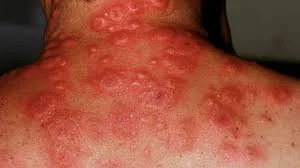
·         Lesions: Bright-red, reddish-blue, or violet papules, plaques, or nodules, sometimes appearing vesicular due to subepidermal edema. Pustules may stud these lesions, which often coalesce into circinate or arcuate plaques.

·         Location: Commonly affect the face, neck, and extremities in an asymmetric pattern. Atypical presentations may involve the auditory canal or scalp, and ulcerative or bullous lesions are more common in malignancy-related Sweet syndrome.

·         Characteristics: Lesions are painful, burning, but not pruritic, and resolve without scarring.

·         Specific Sites:

§  Hands: Lesions may be symmetrically distributed on the dorsal aspects of the fingers and hands.

§  Oral/Ocular Mucosa: Oral lesions (on lips, buccal mucosa, tongue) are common in hematologic disorders. Ocular manifestations include conjunctivitis, episcleritis, uveitis, and other forms of eye inflammation.

Outside the Skin:

·         Lungs: It can cause shortness of breath, a chronic cough, fluid in the lungs, or other breathing issues. In severe cases, it might lead to respiratory failure but usually improves with steroid treatment.

·         Kidneys: It may cause problems like protein or blood in the urine, or a drop in creatinine levels.

·         Central Nervous System (CNS): In 69 cases, it affected the brain and nerves, leading to symptoms like inflammation of the brain (encephalitis), meningitis, headaches, confusion, and seizures. There may be a genetic link (HLA-B54 and HLA-CW1) to CNS-related Sweet Syndrome. Other issues like nerve damage and changes in spinal fluid have also been seen.

·         Other Organs: It can also affect bones, the digestive system, joints, liver, heart, muscles, and spleen. In rare cases, it can progress to a serious condition called Systemic Inflammatory Response Syndrome (SIRS), which can lead to organ failure and shock.

Reaction to Injury:

·         Lesions: Small sores can form at sites of minor injury, similar to a condition called pyoderma gangrenosum.

Underlying Conditions & Pregnancy: Sweet Syndrome can be linked to other diseases like cancer or systemic issues. Imaging tests may be needed to figure out the cause. During pregnancy, the condition might come back in later pregnancies but doesn’t usually harm the baby.


You should also know about : 

Sweet syndrome - Etiology, Epidemiology, Prognosis, Clinical history, Physical examination (Hinglish)


SWEET SYNDROME KI ETIOLOGY (KAARAN):

1. Classic ya Idiopathic Sweet Syndrome: Yeh sabse common type hai, jismein 71% cases aate hain. Isme koi clear underlying condition nahi hoti hai. Pregnancy se related lagbhag 2% cases hote hain.

2. Malignancy-Associated Sweet Syndrome: Yeh zyada tar hematologic cancers se linked hoti hai, jaise acute myeloid leukemia. Dusre cancers, jaise genitourinary, breast, aur gastrointestinal cancers bhi link ho sakte hain.

3. Infection-Related Sweet Syndrome: Bacterial infections (jaise Streptococcus pneumoniae, Staphylococcus, Salmonella), fungal infections (jaise coccidioidomycosis), aur viral infections (HIV, hepatitis, CMV) isse related ho sakti hain.

4. Drug-Induced Sweet Syndrome: Kuch medications jaise G-CSF, all-trans retinoic acid (ATRA), aur trimethoprim-sulfamethoxazole se bhi yeh syndrome ho sakta hai. Kai aur drugs, jaise antibiotics, immunosuppressants, aur vaccines bhi implicated hain.

5. Systemic Disorder-Related Sweet Syndrome: Crohn’s disease, ulcerative colitis, Sjögren's syndrome, lupus, aur rheumatoid arthritis jaise inflammatory diseases se bhi yeh syndrome linked hota hai. 16% cases mein yeh condition hoti hai.

6. Miscellaneous Causes: Surgery ke baad, transplant patients mein, aur HIV patients mein immune reconstitution inflammatory syndrome (IRIS) ke part ke roop mein Sweet Syndrome report kiya gaya hai. Radiotherapy bhi implicated hota hai.


Sweet syndrome


SWEET SYNDROME KI EPIDEMIOLOGY (JIS TARAH SE YEH HOTA HAI)

Frequency: Sweet syndrome uncommon hai, lekin rare nahi. Lagbhag 10-20% cases malignancies se linked hote hain, par zyada tar idiopathic ya benign conditions se related hote hain.

Sex:

  • Classic/Idiopathic Sweet Syndrome: Zyada tar females mein hota hai, jaha female-to-male ratio 3:1 se 8:1 hota hai.
  • Drug-Induced Sweet Syndrome: Isme bhi zyada females affect hoti hain.
  • Malignancy-Associated Sweet Syndrome: Isme gender ka koi preference nahi hota.
  • Children: Bacchon mein bhi yeh sex ka farq nahi dikhata.

Age: Zyada tar 30-50 saal ki mahilayein isse affected hoti hain. Bacchon mein yeh rare hota hai, aur infection ya kabhi kabhi cancer se linked hota hai. 5 din ke neonates tak mein cases report kiye gaye hain.


SWEET SYNDROME KA PROGNOSIS

Zyada tar Sweet Syndrome cases resolve ho jaate hain, lekin kuch cases mein yeh persist kar sakte hain, jisse pain aur skin breakdown ho sakti hai. Prognosis heavily underlying cause par depend karta hai, khaaskar malignancies ya drug reactions se associated cases mein. 50% tak patients mein recurrence hota hai, khaaskar jinhe hematologic malignancies hoti hain.


CLINICAL HISTORY

Zyada tar cases mein fever skin lesions ke aane se kuch din ya weeks pehle hota hai, par kabhi kabhi yeh ek sath bhi ho sakte hain. Bahut se patients ek recent upper respiratory infection, tonsillitis, ya flu-like illness ke 1-3 hafte baad skin lesions ko report karte hain. Recent vaccination ya gastrointestinal infection bhi eruptions se pehle ho sakti hai. Lesions, jo generally achanak aate hain, agar untreated rahein toh kuch din se mahino tak reh sakte hain.


sweet syndrome


PHYSICAL EXAMINATION OF SWEET SYNDROME

Cutaneous Manifestations:

·         Lesions: Bright-red, reddish-blue, ya violet papules, plaques, ya nodules hote hain, kabhi kabhi yeh vesicular lagte hain due to subepidermal edema. In pustules mein ekathe ho kar circinate ya arcuate plaques ban jaate hain.

·         Location: Yeh commonly face, neck, aur extremities ko affect karte hain asymmetrical pattern mein.

·         Characteristics: Lesions painful aur burning hoti hain, lekin itchy nahi hoti, aur bina scarring ke resolve ho jaati hain.

·         Specific Sites:

o   Hands: Lesions symmetrically distributed hoti hain fingers aur hands ke dorsal aspects par.

o   Oral/Ocular Mucosa: Oral lesions hematologic disorders mein common hoti hain. Ocular manifestations mein conjunctivitis, episcleritis, uveitis aur eye inflammation shamil hain.


Outside the Skin:

·         Lungs: Yeh shortness of breath, chronic cough, ya lungs mein fluid jaise symptoms cause kar sakte hain.

·         Kidneys: Yeh protein ya blood in urine, ya creatinine levels mein drop jaise problems cause kar sakte hain.

·         CNS: Brain aur nerves affect hote hain jaise encephalitis, meningitis, headaches, confusion aur seizures.

·         Other Organs: Bones, digestive system, joints, liver, heart, muscles aur spleen ko affect kar sakte hain.


Reaction to Injury:

Lesions: Chhoti chhoti ghaav ya zakhm un jagah par ban sakte hain jahan chhoti chhoti chot lagi ho, yeh kuch pyoderma gangrenosum jaisi condition se milti-julti hoti hai.

Underlying Conditions & Pregnancy:

Sweet syndrome kuch doosri bimariyon jaise cancer ya systemic issues ke saath linked ho sakti hai. Cause pata karne ke liye kuch imaging tests karwani pad sakti hai. Agar kisi pregnant woman ko Sweet syndrome ho, to aane wali pregnancies mein wapas aa sakta hai, lekin yeh baby ko usually nuksaan nahi pahunchaata.


Sweet syndrome (Introcuction, Types, Pathophysiology)

Sweet syndrome - Introduction, Types, Pathophysiology (Hinglish)


Acute Febrile Neutrophilic Dermatosis (Sweet Syndrome) 

Introduction

Sweet Syndrome (SS), ya acute febrile neutrophilic dermatosis, ko pehli baar Robert Douglas Sweet ne 1964 mein describe kiya tha. Ye ek reactive process hai jo achanak se tender, red-to-purple papules aur nodules ke saath hota hai, jo aksar plaques banate hain. Ye lesions zyadatar upper extremities, face, ya neck par hote hain. Is dermatologic condition ke saath fever aur elevated neutrophil levels (peripheral neutrophilia) bhi dekhe jaate hain.


Sweet syndrome

Sweet syndrome (Introduction, Types, Pathophysiology)

Acute Febrile Neutrophilic Dermatosis (Sweet Syndrome)

Sweet syndrome (SS), or acute febrile neutrophilic dermatosis, was first described by Robert Douglas Sweet in 1964. It is a reactive process characterized by the sudden onset of tender, red-to-purple papules and nodules that often merge to form plaques, usually occurring on the upper extremities, face, or neck. This dermatologic condition is often associated with fever and elevated neutrophil levels in the blood (peripheral neutrophilia).


Sweet syndrome
Image source Google

My Blog List